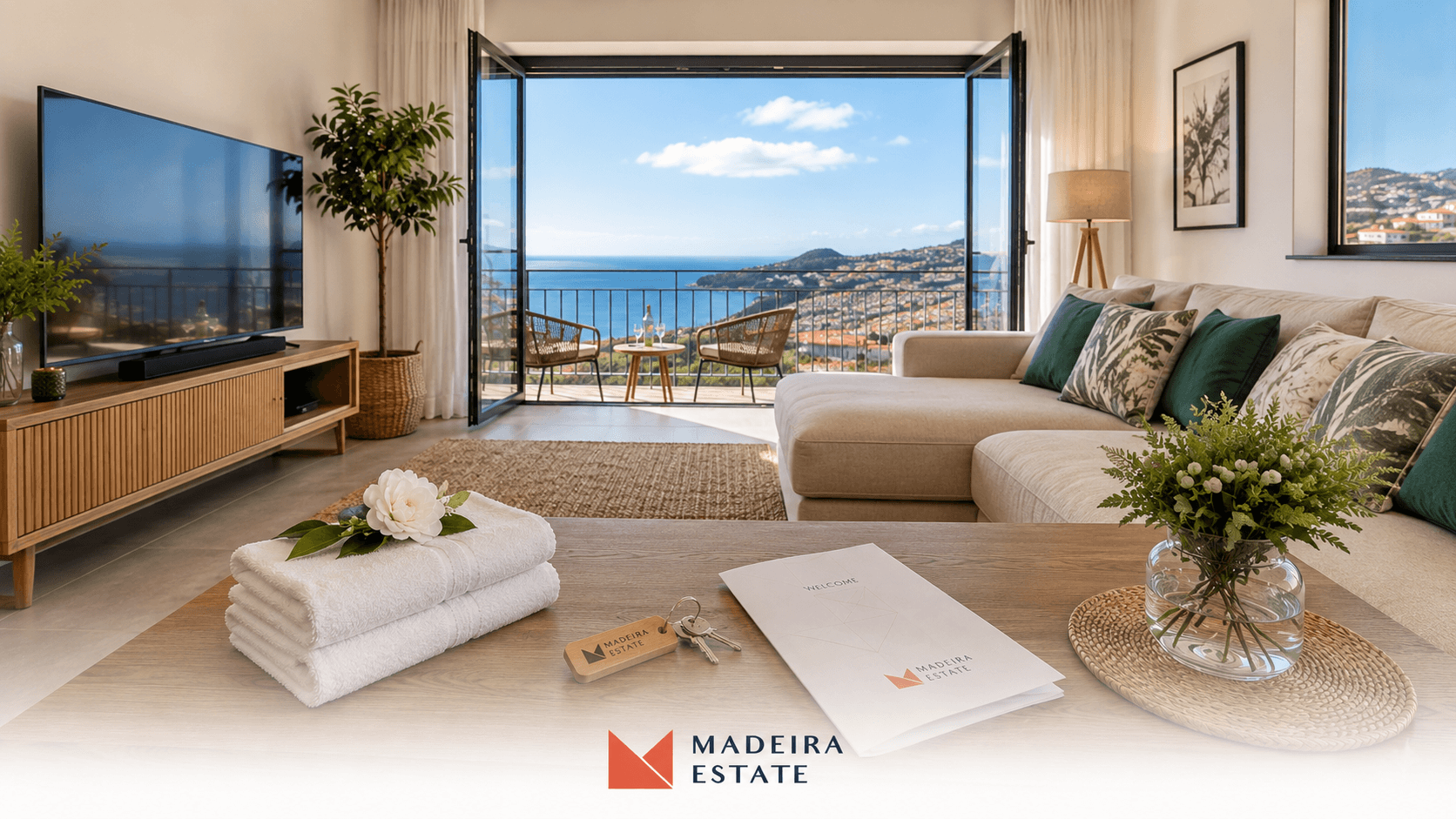


A practical guide for Alojamento Local owners
Pricing your short-term rental in Madeira has a bigger impact on your results than almost anything else. Get it right and you fill the calendar at a rate that works for you. Get it wrong and you end up either busy but underpaid, or sitting on an empty property wondering what went wrong.
Below is a straightforward approach you can apply to any AL (Alojamento Local) property in Madeira.
1. Start With Your Numbers, Not With Airbnb
Before looking at what others charge, you need to know the minimum price at which your property makes financial sense.
Fixed costs: Mortgage or rent, condominium fees, IMI, insurance, licences, internet, basic TV, accounting, and any property management fees.
Variable costs per stay: Cleaning and laundry, welcome packs, consumables, utilities, platform commissions, maintenance and replacements.
One-time and periodic costs: Furniture, appliances, renovations, décor, and occasional deep cleans or upgrades spread over several years.
From these figures, calculate your minimum nightly cost: total monthly costs divided by realistic booked nights per month. Then add your target profit margin on top to define a floor price you will not go below, even for last-minute bookings.
Sometimes it’s better to leave a night empty than take a booking that costs you money.
2. Analyse the Local Madeira Market
Once you know your floor, you can position your price against comparable properties on platforms like Airbnb, Booking.com and Vrbo.
Focus on:
- Property type: Studio vs T1/T2, villa vs quinta, private room vs entire place. Compare like-for-like.
- Расположение: Funchal city centre, Lido, Old Town, São Martinho, Garajau, Caniço, Calheta, Ponta do Sol, Porto da Cruz, Santana. Prime areas near the sea or main tourist spots justify higher rates.
- Capacity and layout: Smaller properties often achieve a higher price per person than large villas. Bigger homes can use a base rate plus a fee per extra guest.
- Quality and style: Renovated, modern properties with good design and views can sit above average market prices, if the photos clearly show the added value.
Run searches the way a guest would: pick your dates, guest count and property type, then see where comparable listings land on price. You want your base rate to sit comfortably within that range, not stick out as oddly cheap or unexplained expensive.
3. Adjust for Seasonality, Events and Length of Stay
Madeira gets visitors year-round, but demand moves in clear patterns. Pricing that tracks those patterns earns significantly more than a flat rate.
When to increase rates:
- Christmas and New Year (Funchal firework festival), Easter, summer months, Carnival, Flower Festival, Wine Festival, New Year cruise traffic
- Long weekends, school holidays in key source markets, major sporting or cultural events
When to reduce or offer incentives:
- Quieter months between major events, shoulder seasons, mid-week gaps
Short stays cost you more per night due to turnover, cleaning and check-ins, so the nightly rate should be higher for 2-3 nights than for a week or a month.
- 2-3 nights: Highest nightly rate
- 4-6 nights: Slightly lower nightly rate
- 7+ nights: Weekly discount to reward longer stays
- 28+ nights: Significant monthly discount, but never below your minimum cost per night
You can also set a minimum stay rule (4-5 nights in high season, 2-3 nights in low season) to improve profitability and reduce turnover.
4. Price According to Value, Not Just Cheap vs Expensive
Aim for the best fit with the guests you want, not simply the lowest price on the page.
What adds value to your listing:
- Расположение: Sea view, walking distance to the Old Town, parking, proximity to levada trails or natural pools, easy airport access
- Property features: Balcony or terrace, pool, jacuzzi, garden, workspace, fast Wi-Fi, air conditioning, fully equipped kitchen, quality mattresses, smart TV
- Services: Professional cleaning, self check-in, luggage storage, airport transfers, local experiences, responsive communication
When your property genuinely offers more than similar listings, you can charge more than the market average. The key is making sure your photos and description actually show what makes it worth it.
Charm pricing (e.g. €119 instead of €120) tends to convert better for mid-range listings.
5. Use Discounts and Promotions Strategically
Discounts can be powerful, but they need to be structured around your costs and goals.
- Early-bird discounts: Lower rate for bookings made 60-90 days in advance, helping you secure base occupancy early
- Last-minute discounts: Small reductions as check-in approaches, always above your floor price. For example, 20% off three days out, 10% off the day before
- Longer-stay discounts: Automatically applied weekly or monthly reductions to encourage fewer turnovers and more predictable income
- Repeat guest discounts: A special rate code for returning guests and referrals
Before running any discount, check that the reduced rate still covers costs and leaves a margin. If a promotion is not moving the needle after a few tries, drop it.
6. Review Performance and Keep Optimising
Pricing needs regular attention. A few key figures to watch:
- Occupancy rate: Very high occupancy at low prices usually means you are too cheap
- Average Daily Rate (ADR): Your average nightly income across booked nights
- RevPAR: Total revenue divided by total nights available, so empty nights count against you
- Lead time: How far ahead guests tend to book, useful for tuning early-bird and last-minute pricing
Pair these figures with regular competitor checks and make small tweaks often, rather than big changes rarely.
7. Madeira-Specific Tips for Owners
- Regulatory framework: Make sure your property is properly registered as Alojamento Local and factor compliance costs and local taxes into your baseline calculations.
- Source markets: Think about who actually stays with you and when. Digital nomads tend to come in winter, central-European holidaymakers in summer, and cruise passengers cluster around New Year. Each group has different length-of-stay patterns and price sensitivity.
- Photos and listing quality: A well-presented property with professional photos, strong reviews and a clear description justifies a stronger rate than a poorly presented but similar unit.
Final thoughts
Good pricing comes down to knowing your costs, reading the local market, and being willing to adjust when the numbers tell you to. Treat your rental like a business, keep an eye on what is working, and you will be in a much stronger position than the majority of hosts who set a rate and forget about it.